Date: July 13, 2026 / Auther: EMC
Date: July 13, 2026 / Auther: EMC
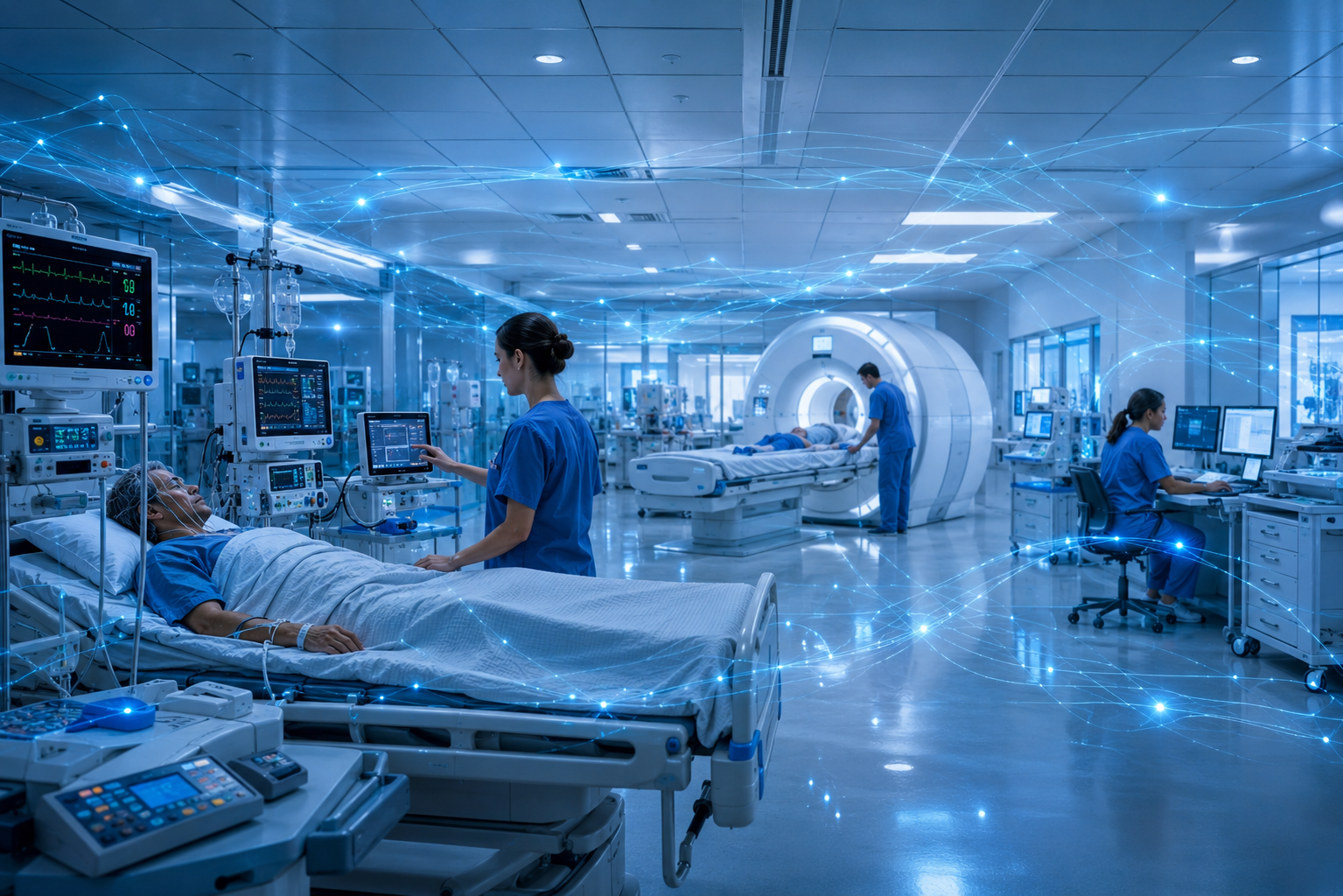
Technology nowadays is the backbone of hospitals. Different life-saving and life-maintaining tools, like MRI scanners, infusion pumps, ventilators, patient monitors, and wireless nurse-call systems, coexist in the same electromagnetic spectrum. A mere technological fault is not the only consequence of their mutual interference. Patient safety can also be compromised. That is why EMC, or Electromagnetic Compatibility, has turned into a vital component in the planning of healthcare infrastructure, although it is often neglected.
Electromagnetic Compatibility (EMC) is the ability of electrical and electronic equipment to operate properly in the intended environment without introducing or being affected by unacceptable levels of electromagnetic disturbance. In a hospital, that environment is extremely crowded with many kinds of devices coexisting and interacting very closely with one another. Wi-Fi networks, mobile phones, RFID asset trackers, security systems, and powerful medical imaging devices all share the operator's space, often even in the same room.
Failure to adequately address EMC might cause serious consequences: the readings of a ventilator could be altered, the infusion pump might dispense the wrong amount of medication, or the monitor could generate false alarms or, even worse, fail to detect a genuine alarm. These are not just theoretical risks. Authorities all over the world, such as the FCC, IEC, and IEEE, have collected and reported instances of medical device failure caused by electromagnetic interference (EMI).
Besides having to deal with different types of EMI sources one after another as other industries do, hospitals have to manage a few that are very specific and even quite contradictory, including, but not limited to:
Wireless communication system, Wi-Fi, Bluetooth, and cellular signals used for patient monitoring and staff communication High-power imaging equipment, MRI, CT, and other diagnostic machines that generate strong electromagnetic fields RFID and asset-tracking systems, used for inventory and patient identification Portable electronic devices, staff and visitor smartphones and tablets Building infrastructure, power distribution systems, elevators, and HVAC controls
We could think of each one of them as a small source of electromagnetic energy in the environment, and their proximity to each other without the right testing and mitigation could bring a compounded effect which is not only difficult to predict but could also make it worse.
Ensuring EMC in a hospital isn't a one-time task—it requires ongoing planning, testing, and management across the facility's lifecycle:
1.Site-Level EMC Assessment Before introducing any new devices or doing a major change of the hospital buildings, hospitals are recommended to perform the assessment of their electromagnetic environment to get a clear picture of the existing electromagnetic interference levels and at the same time pinpoint the highest risk areas such as places where imaging and critical care units are located. 2. Compliance with International Standards Besides verifying the working safety of medical devices and hospital systems by their tests against the relevant IEC, EN, and IEEE standards, it is not only about the certification but a confirmation that the equipment shall work safely in a real hospital environment that is a subject of these points. 3.In-Situ Testing, Not Just Lab Testing On one side, it is true that laboratory EMC testing may be very good for research at the beginning, but it only reflects the hospital in a simplified manner. Conditions in the hospital are constantly changing and so affect the test results. This way, in situ testing refers to tests that are carried out on-site, which in turn leads to findings of interference issues that could not be previously detected under the lab conditions. 4.System-Level EMC Management Rather than testing devices in isolation, hospitals benefit from a system-level approach that considers how all electronic systems interact across a department or entire building. This is especially important in facilities with mission-critical infrastructure, similar to the coordinated EMC planning used in railway and airport systems. 5.Ongoing Monitoring and Staff Training EMC is far from being a "one time action". New equipment or wireless systems are continuously being introduced to the hospital and at the same time, the recurrence of the evaluation and the training of the personnel are to be considered as major factors in the safe management of the electromagnetic environment.
In many aspects, healthcare facilities can be considered mission-critical infrastructure, similar to power grids, data centers, or transportation hubs. An issue with electromagnetic compatibility can sometimes lead not only to equipment downtimes but, more importantly, to patient outcomes being affected. It has become mandatory and no longer a matter of choice to handle EMC with the same level of attention and care as safety-critical systems.
Besides fulfilling the regulatory requirements, hospitals investing in proper EMC testing, compliance consulting, and system-level management are in fact, creating a safer atmosphere for the patients, staff, and the highly sensitive equipment which is essential for the critical care operation.
Due to the complex nature of hospital electromagnetic environments, a lot of healthcare facilities use the help of expert EMC consultants who can perform evaluations, direct compliance, and design EM mitigation strategies. EMC experts with extensive experience working with critical mission infrastructures like railways and power grids consider the entire system and such broader perspective enables hospitals to spot risks that should affect patient safety, and Because of this prevent them.
If your building intends to install new equipment’s, carry out renovations, or just wants a comprehensive assessment of the electromagnetic risks, it is advisable to seek the advice of knowledgeable EMC professionals at the early stages as the result will be a saving in time, cost, and risk.
Electromagnetic Compatibility Consortium Limited (EMCCL) Phone: +852 3899 4689 Business Hours: Mon – Fri, 9:00 AM – 6:00 PM 📧 Email: info@emccl.org 🌐 Website: www.emccl.org
Reach out to our team today for a consultation on hospital EMC assessments, compliance testing, and system-level electromagnetic risk management.